PV
Plumbing Vent Stacks
Plumbing vents commonly extend a relatively small distance above the roof, but they can still be exposed to lateral force from snow moving toward the eave.
Plumbing vents, chimney pipes, stove pipes, gas vents and other vertical roof penetrations can be exposed to substantial lateral force when snow and ice begin moving down a sloped metal roof.
Plumbing vent stacks and larger chimney assemblies are both vertical roof penetrations that can extend into the path of sliding snow and ice.
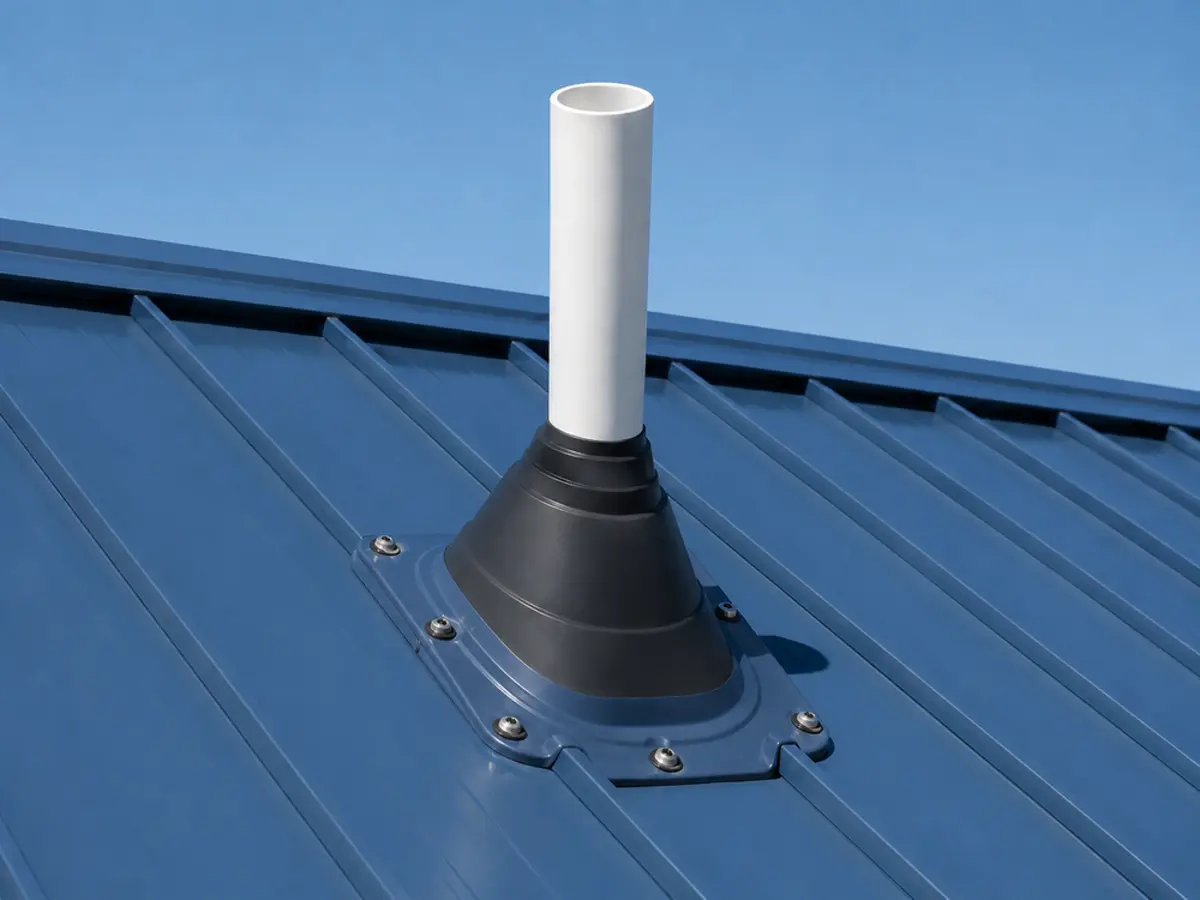
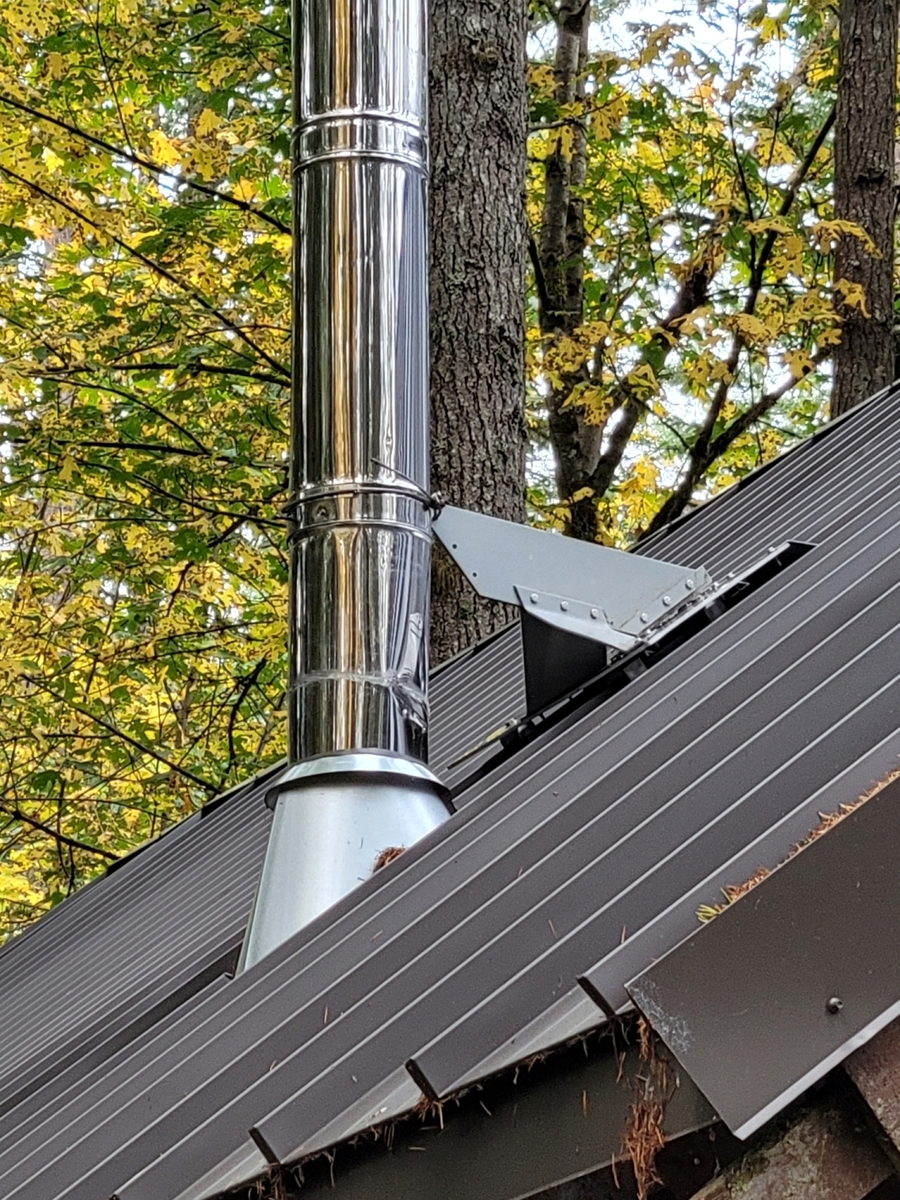
Different penetrations serve different building functions, but they share one vulnerability: they project above the roof surface and can become obstacles in the path of moving snow and ice.
Plumbing vents commonly extend a relatively small distance above the roof, but they can still be exposed to lateral force from snow moving toward the eave.
Taller chimney and stove-pipe assemblies can present a larger obstruction to moving snow and ice and may require both snow diversion and penetration support.
Gas vents, taller stacks and similar vertical penetrations can also project into the snow path and may benefit from purpose-built protection.
A taller pipe or chimney presents more exposed surface above the roof and can receive greater leverage when moving snow pushes against it.
Location also matters. A penetration positioned in the path of accumulated snow moving toward the eave can be exposed to repeated snow and ice movement during winter conditions.
Roof pitch, pipe or chimney diameter, penetration height and snow conditions should all be considered when evaluating the protection needed at a particular location.
Dedicated vent protection addresses both the moving snow and the vulnerability of the penetration itself.
The snow-diversion portion of the system is positioned on the upslope side so moving snow and ice encounter the protective assembly before reaching the pipe or chimney.
The VentSaver protection concept also includes a connection to the pipe or chimney so the protective assembly provides support in addition to snow diversion.
Damage is not limited to the upper portion of a vent pipe or chimney. Movement at the penetration can also affect the area where the pipe passes through the roof.
Sliding snow and ice can reach the pipe base, roof boot or flashing area if the snow path is not properly redirected.
The protection assembly should therefore be installed so moving snow and ice transition onto and around the protective components rather than working underneath them.
Protecting the penetration is only part of the installation. The system also has to attach correctly to the specific metal roof.
Compatible standing-seam systems use clamps attached to the seams so the vent-protection assembly can be mounted without drilling through the floating roof panel.
Standing seam vent protection →Screw-down systems are mechanically fastened through the metal panel into suitable structural material beneath the roof.
Screw-down vent protection →Product-specific installation instructions should be followed when choosing mounting components and determining the final installation.
See how a purpose-built system redirects moving snow and ice around a roof penetration while also providing support to the vent pipe or chimney.