1
The Mounting Assembly Is Fastened to the Roof
The mounting assembly is mechanically fastened through the metal panel into appropriate material beneath the roof.
Screw-down and exposed-fastener metal roofs can use mechanically fastened vent-protection systems, but the attachment must be made into adequate structural material beneath the metal panel rather than relying on the thin roof sheet alone.
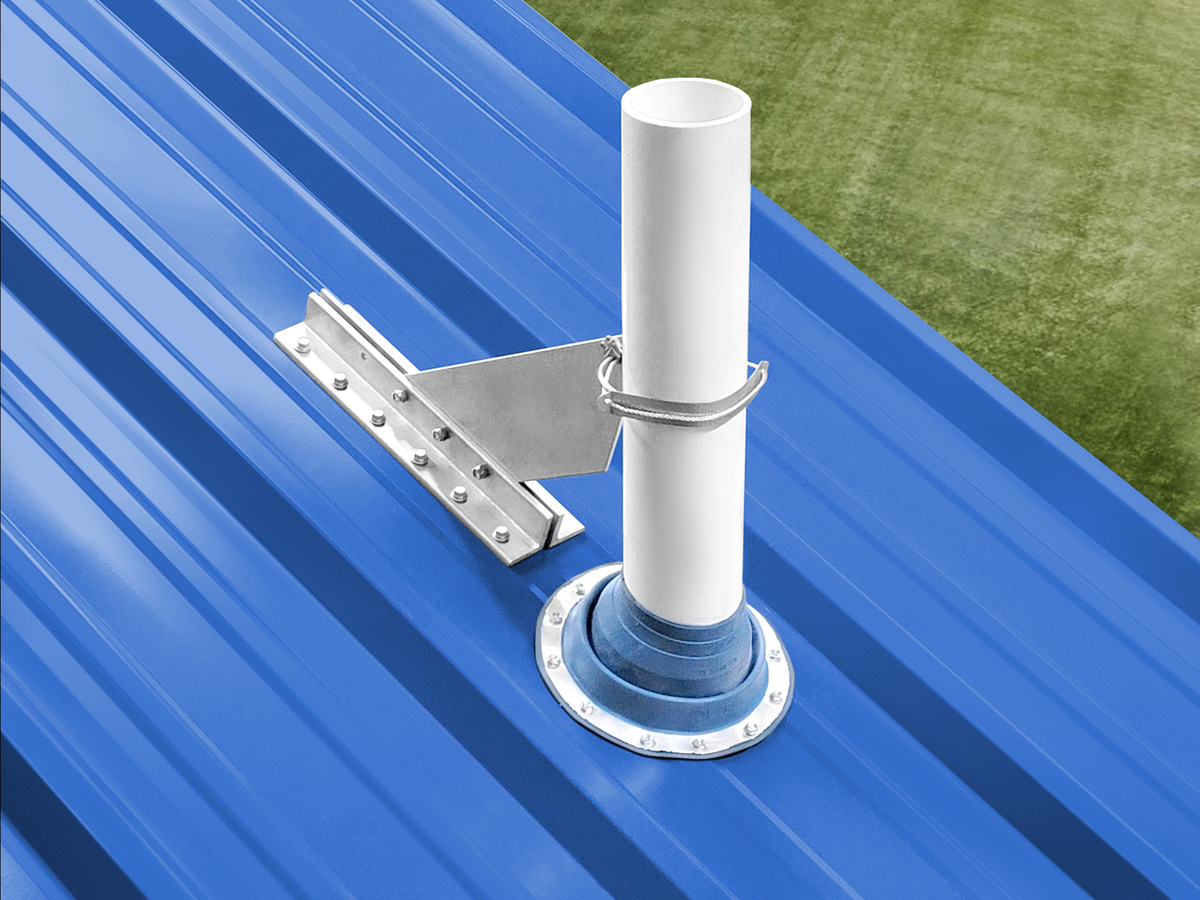
Screw-down metal roofs, also called exposed-fastener roofs, are built differently from standing seam systems.
Fasteners are already used through the roof panels as part of the roofing system, so a mechanically fastened vent-protection mounting assembly can be used when it is installed according to the product-specific requirements.
The critical issue is not simply whether a screw passes through the panel. The important issue is what that fastener is anchored into beneath the metal.
Mechanical attachment, snow diversion and penetration support work together as one system.
The mounting assembly is mechanically fastened through the metal panel into appropriate material beneath the roof.
The snow-diversion fin is positioned on the upslope side of the vent pipe or chimney where moving snow and ice approach the penetration.
The VentSaver protection concept also connects the assembly to the penetration so it provides support in addition to snow diversion.
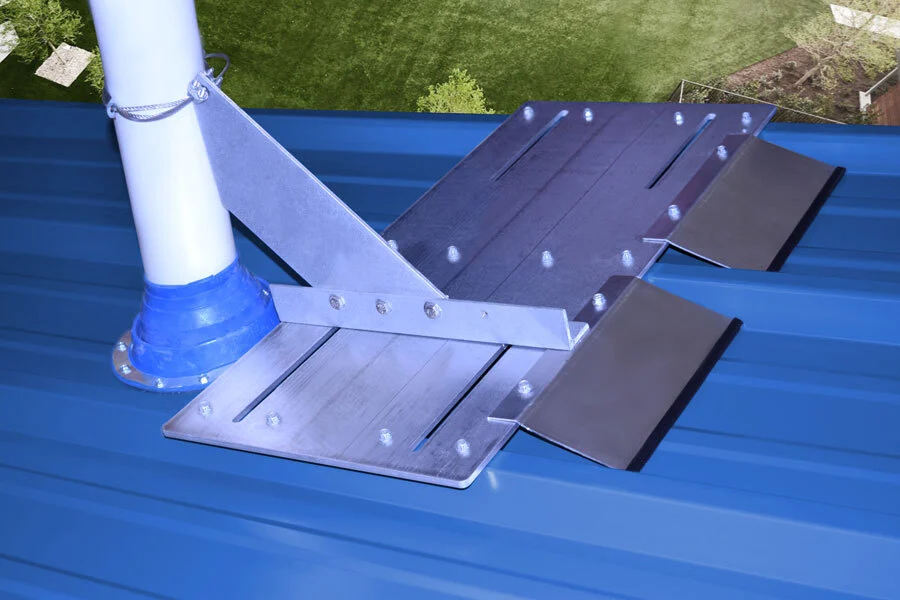
A thin metal roof panel is not intended to provide the entire structural resistance for a vent-protection system.
The mounting fasteners need to engage suitable material beneath the roof panel, such as wood blocking, decking or another appropriate structural substrate.
The exact substrate and attachment method depend on the roof construction and the product-specific installation requirements.
The protector needs to encounter moving snow before the penetration does.
Snow and ice can release from a sloped metal roof and move toward the eave.
A vent pipe or chimney projecting above the roof surface can become an obstruction in that path.
The snow-diversion fin is installed on the upslope side so moving snow encounters the protective assembly before it reaches the vent or chimney.
The moving snow can then be redirected around the penetration.
The mounting plate and snow-diversion assembly should be installed so moving snow and ice travel onto and around the protection system rather than working underneath it.
Proper installation helps protect the area around the base of the vent pipe or chimney and the roof boot.
A dedicated vent protector addresses both the moving snow and the penetration itself.
The protective fin redirects moving snow and ice around the vent pipe or chimney instead of allowing the penetration to receive the force directly.
The VentSaver system also connects to the pipe or chimney, adding support to the penetration as part of the protective assembly.
A screw-down vent-protection installation should be matched to both the roof construction and the penetration being protected.
Product-specific installation instructions should be followed when selecting fasteners, locating the mounting assembly and determining the final installation.
A mechanically fastened vent protector is designed to protect a particular vent pipe, chimney or similar roof penetration.
A roof-wide snow-retention system has a different purpose: managing accumulated snow over a broader portion of the roof.
Both systems can be used together when the building requires penetration-specific protection and broader snow management.
Current VentSaver models, mounting requirements, installation instructions, accessories and purchasing information are available directly from VentSaver.