1
Clamps Attach to the Seams
Compatible roof clamps secure the mounting assembly to the standing seams without requiring fasteners through the field of the floating roof panel.
Standing seam metal roofs require a vent-protection attachment method that works with the roof's concealed-fastener design. Compatible clamp-mounted systems can protect vent pipes and chimneys without drilling directly through the floating roof panel.
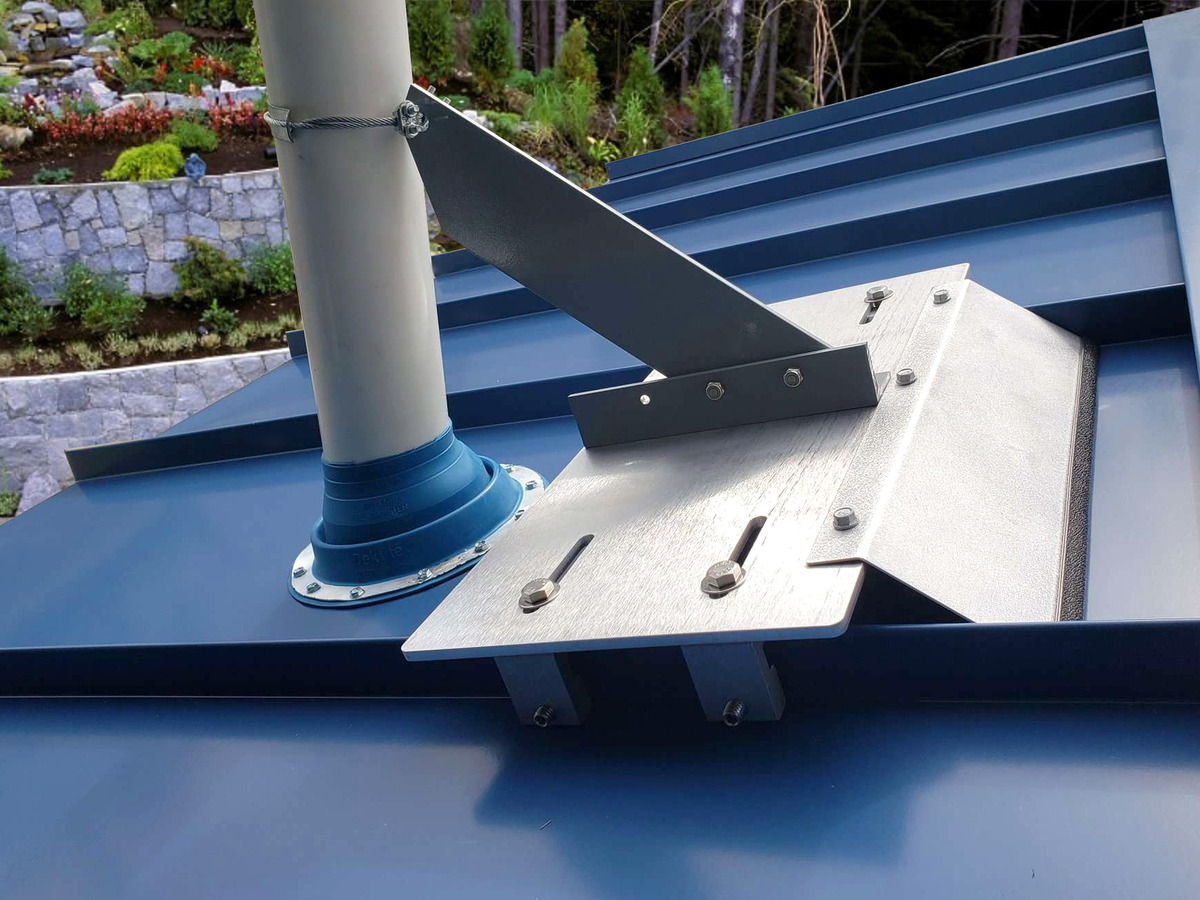
Standing seam metal roofing is different from exposed-fastener roofing because the visible roof panels are typically secured with concealed clips rather than rows of fasteners driven directly through the panel surface.
The panel system is also designed to accommodate movement as temperatures change.
Because of this construction, drilling through the panel simply to attach a vent protector can interfere with the intended floating-panel design.
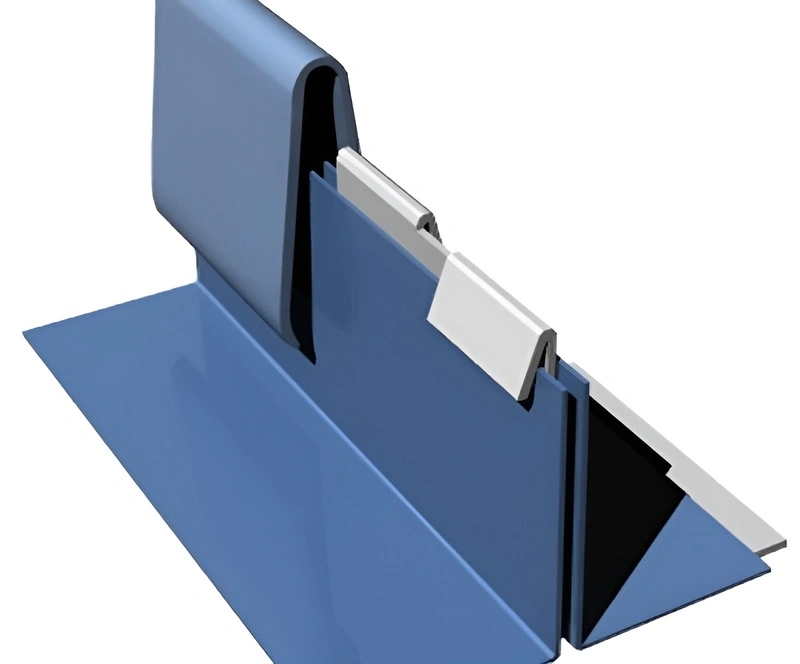
The roof attachment, mounting plate, snow-diversion fin and pipe support work together as one protective assembly.
Compatible roof clamps secure the mounting assembly to the standing seams without requiring fasteners through the field of the floating roof panel.
The mounting assembly creates a supported platform around the penetration and distributes the attachment across compatible roof seams.
The protective fin is positioned on the upslope side so moving snow and ice can be redirected around the vent pipe or chimney.
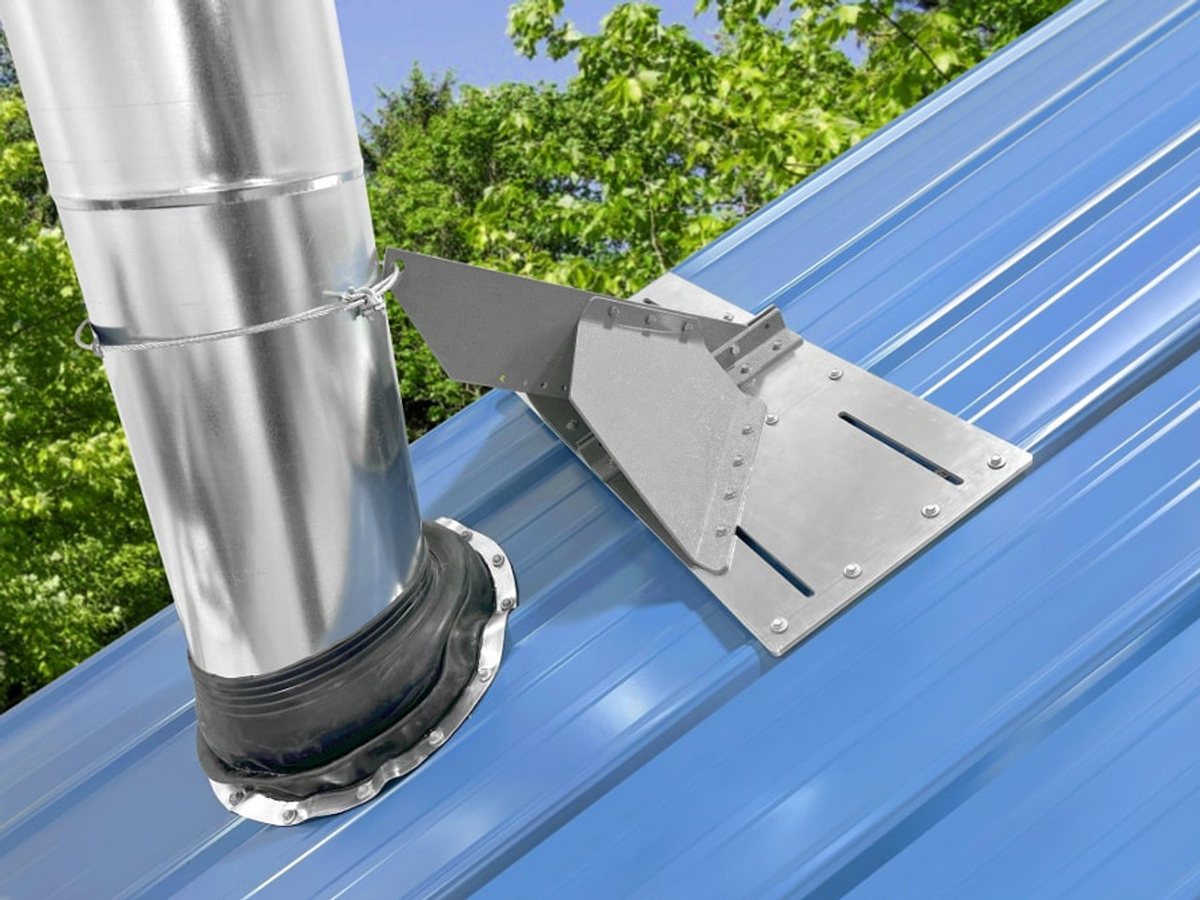
The standing seam mounting assembly provides the supported base for the vent-protection system.
The snow-diversion components are positioned on the upslope side of the penetration so moving snow and ice encounter the protective assembly before reaching the pipe or chimney.
The system also connects to the penetration so it provides pipe or chimney support in addition to snow diversion.
A properly selected standing seam clamp attaches to the seam rather than requiring a screw to be driven through the metal roof panel.
This allows the vent-protection assembly to work with the standing seam roof configuration instead of creating a new penetration through the panel solely for mounting the protector.
Clamp compatibility still matters. Standing seam profiles, seam shapes and dimensions can vary, so the attachment hardware must be appropriate for the specific roof seam.
The vent protector must address moving snow before it reaches the pipe or chimney.
Accumulated snow and ice can release from the smooth metal roof surface and begin moving toward the eave.
A vent pipe or chimney located in that path becomes an obstruction if it is not protected.
The protective fin is installed on the upslope side of the penetration so the moving snow encounters the protection system before it reaches the pipe.
The snow can then be redirected around the vent or chimney instead of striking it directly.
Moving snow and ice should transition onto the mounting assembly rather than being allowed to work underneath it.
VentSaver standing seam installation information uses an upslope ramp ahead of the mounting plate to help transition moving ice onto the protection assembly before it reaches the main diverter.
This helps protect the area around the base of the pipe and the roof boot.
Snow diversion is only one part of the protection concept.
The clamp-mounted assembly provides a supported structure around the roof penetration.
The VentSaver protection concept connects the assembly to the vent pipe or chimney so the penetration receives support in addition to snow diversion.
A standing seam vent-protection installation should be matched to both the roof and the penetration being protected.
Product-specific installation instructions should be followed when choosing clamps, mounting components and the final protection layout.
A clamp-mounted vent protector is designed to protect a particular vent pipe, chimney or similar penetration.
A roof-wide snow-retention system serves a different purpose: managing accumulated snow across a larger portion of the roof.
The two systems can be used together when both penetration protection and broader snow management are needed.
Current VentSaver models, clamp requirements, installation instructions, accessories and purchasing information are available directly from VentSaver.