1
Snow and Ice Begin Moving
Accumulated snow and ice can release from the smooth surface of a sloped metal roof and begin moving toward the eave.
Purpose-built vent protection addresses two problems at the same time: moving snow and ice approaching a roof penetration, and the need to provide support to the exposed vent pipe or chimney.
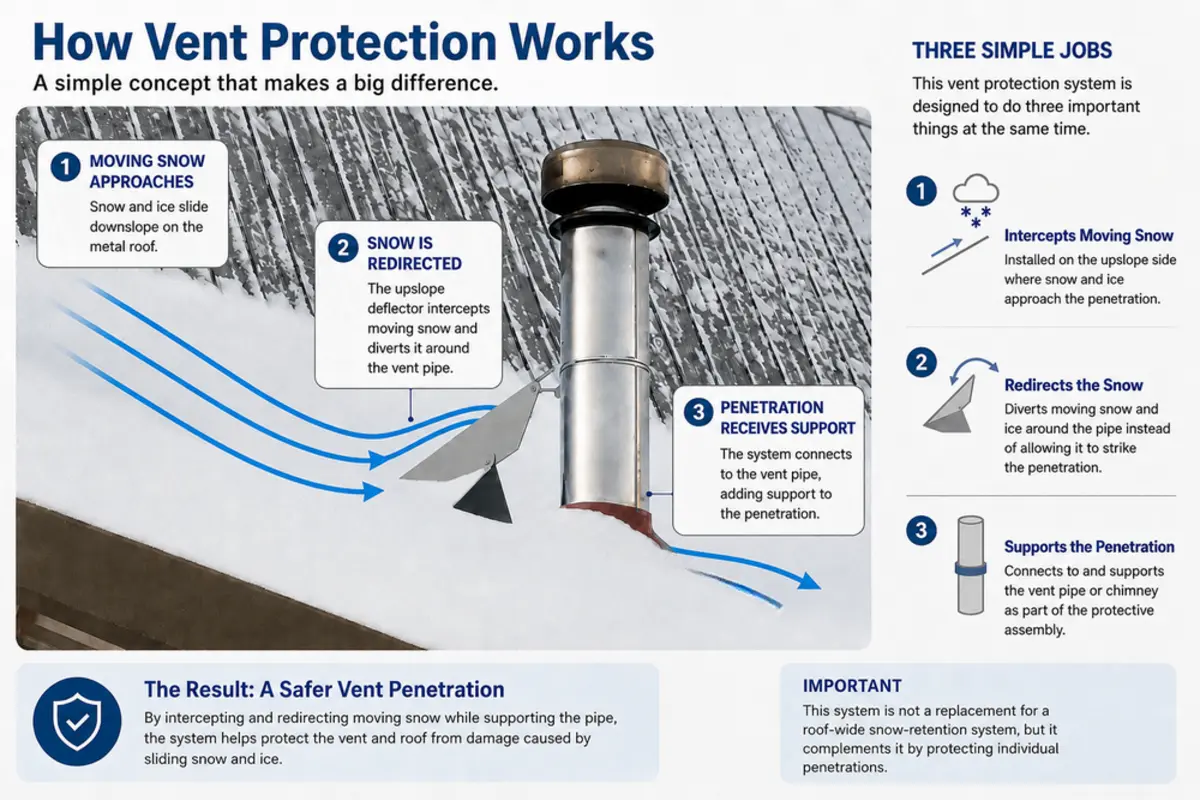
The protection system is designed to address the path of moving snow before that snow reaches the vulnerable penetration.
Accumulated snow and ice can release from the smooth surface of a sloped metal roof and begin moving toward the eave.
A protective assembly on the upslope side of the penetration separates and redirects the moving snow and ice so it can pass around the pipe or chimney.
The system also connects to the vent pipe or chimney, providing support to the penetration as part of the protective assembly.
Snow and ice generally approach a roof penetration from the upslope direction as they move toward the eave.
Positioning the protective assembly above the penetration allows the system to encounter the moving snow before the vent pipe or chimney does.
The diverter portion of the assembly then creates a path around the penetration rather than allowing the moving snow to strike the pipe directly.
A dedicated system is different from simply placing another obstacle in front of a vent pipe.
The upslope portion of the system is shaped and positioned to redirect moving snow and ice around the roof penetration.
This helps reduce the direct force that would otherwise reach the exposed pipe or chimney.
The VentSaver protection concept also includes a connection to the vent pipe or chimney.
This means the assembly provides penetration support in addition to snow diversion.
Moving snow and ice should be directed onto and around the protection assembly rather than being allowed to work underneath it.
VentSaver installation information uses an upslope ramp as part of the protection concept so moving ice can transition onto the mounting assembly before reaching the main diverter.
Properly addressing this transition helps protect the area around the base of the pipe and the roof boot.
The snow-diversion principle is similar, but the way the protection system attaches to the roof changes with the roofing system.
Standing seam metal roofs commonly use concealed fastening systems and allow the panels to move as temperatures change.
A compatible VentSaver standing-seam mounting system uses roof clamps attached to the seams rather than drilling fasteners directly through the floating roof panel.
Learn about standing seam vent protection →Exposed-fastener metal roofs can use mechanically fastened mounting methods.
The mounting fasteners must engage adequate material below the metal panel rather than relying only on the thin roof sheet for structural attachment.
Learn about screw-down vent protection →No. A vent-protection system and a roof-wide snow-retention system perform different functions.
Vent protection focuses on a particular vent pipe, chimney or similar penetration. Snow-retention systems are arranged across a broader roof area to manage accumulated snow.
The two approaches can be used together when the roof requires both penetration-specific protection and broader snow management.
Compare vent guards and snow guards →
Vent-protection requirements depend on the roof and the penetration being protected.
Product-specific installation instructions should always be followed when selecting and installing the actual protection system.
The complete protection concept is intended to create a supported path around a vulnerable roof penetration.
Instead of allowing moving snow and ice to encounter the vent pipe or chimney as the primary obstruction, the protection system meets that moving material first, redirects it around the penetration, and provides support to the pipe or chimney.
Current product models, installation instructions, accessories and purchasing information are available directly from VentSaver.